Boosting infrastructure links and customs clearance at Vietnam–China border gates
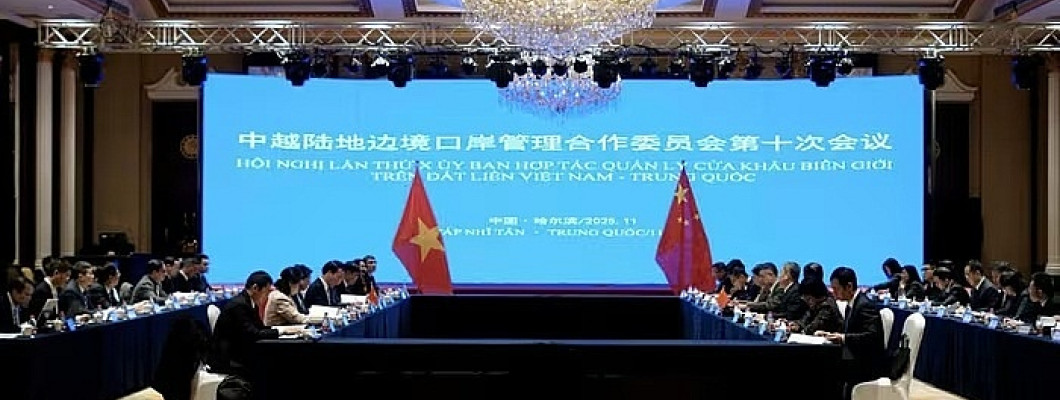
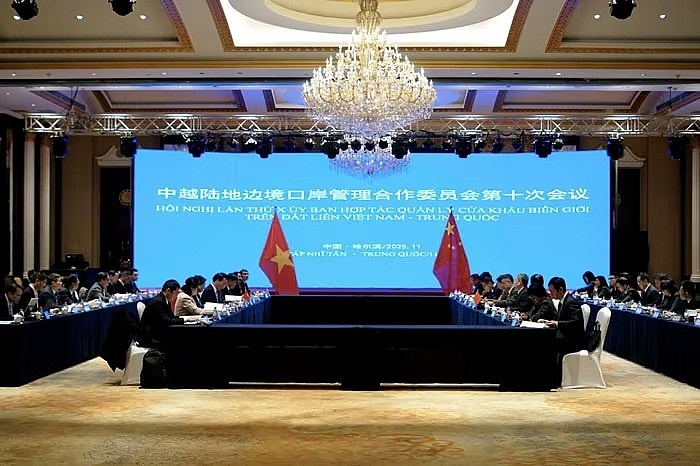
At the 10th Conference of the Vietnam–China Joint Border Gate Management Cooperation Committee, held on November 18 in China, delegates from both countries agreed to continue upgrading border infrastructure, expand customs clearance channels and intensify the application of technology to reduce congestion and improve trade efficiency.
According to Mr. Trương Bảo Phong, Deputy Director-General of China’s General Administration of Customs, in 2024 goods passing through Vietnam–China border gates reached 13.15 million tonnes; the number of cross-border entries and exits reached 20.29 million movements, a sharp increase compared with 2023. The two sides have stepped up information sharing on planning, border gate refurbishments and clearance capacity.
From Vietnam, Lieutenant General Vũ Trung Kiên said several key transport projects are being implemented, such as the Bát Xát – Bá Sái, Thanh Thủy – Thiên Bảo and Ma Lù Thàng – Kim Thủy Hà bridges. The Green Channel for agricultural products continues to deliver clear results, with strong growth at the Hà Khẩu and Thiên Bảo gates in 2024–2025.
Both sides also agreed to promote upgrades of gates including Tà Lùng – Thủy Khẩu, Lý Vạn – Thạc Long and Chi Ma – Ái Điểm, while completing several dedicated clearance routes to ease pressure on import-export cargo. Vietnam has completed procedures to open the A Pa Chải – Long Phú gate; China is implementing corresponding infrastructure.
Accelerating the smart border checkpoint model
Vietnam and China will continue piloting the Smart Border Checkpoint model at milestone areas 1119–1120 and 1088/2–1089 within the Hữu Nghị – Hữu Nghị Quan crossing. China has largely completed the infrastructure; the remaining project is expected to enter trial operation by the end of 2025. Both sides aim to put the Smart Border Checkpoint at Hữu Nghị into operation before the end of 2026 and to expand the model to Móng Cái – Đông Hưng and Lào Cai – Hà Khẩu.
Strengthening transport cooperation and border control
The conference noted progress in coordination of road transport, standardization of border pass issuance and deployment of on-site printing at most gates. Both sides welcomed the opening of the Bản Giốc – Đức Thiên scenic area, while stepping up tourism management and border security.
Cooperation between customs and health quarantine forces continues to expand through talks and joint epidemic-prevention exercises. Vietnam and China are also coordinating amendments to agreements related to border and gate management; they agreed on standardized residence durations for border residents using travel passes.
The two countries agreed to strengthen inspections, increase fee transparency, protect citizens’ rights and promote cargo handling at the Hữu Nghị – Hữu Nghị Quan gate. They also discussed rail-connection projects, notably the standard-gauge Bắc Lào Cai – Hà Khẩu route.
Concluding the conference, the sides approved the 2025–2026 work programme focusing on opening and upgrading gates, developing modern infrastructure, promoting Smart Border Checkpoints and enhancing clearance capacity. The 11th Conference will be held in Vietnam in 2026.